Human Anatomy by Michael McKinley
The integrative, visually rich textbook trusted by students and educators for mastering the structure and function of the human body.
- Comprehensive coverage of body systems with integrative clinical connections
- Clear, detailed illustrations that make complex structures approachable
- Available in multiple formats including Loose Leaf and Paperback editions
Explore Human Anatomy by Michael McKinley
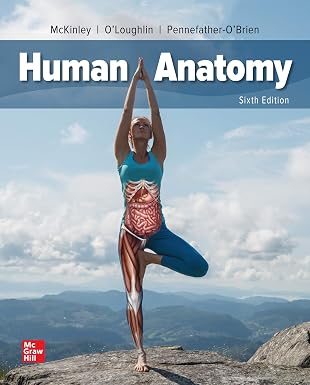
Human Anatomy — Sixth Edition
The flagship edition offering full-color illustrations, integrative clinical applications, and in-depth coverage of every major body system. Ideal for undergraduate anatomy courses.
Check Price
Human Anatomy — Alternate Format Edition
Available in a convenient alternate print format, this edition delivers the same authoritative McKinley content with flexible reading options for students on any budget.
Check PriceInside the Book
Human Anatomy by Michael McKinley, Valerie O’Loughlin, and Elizabeth Pennefather-O’Brien is structured to guide students from foundational concepts through advanced systemic study. Each chapter opens with a learning objectives overview and closes with review questions that reinforce retention. The Sixth Edition features:
- Full-Color Cadaveric Photography — Real specimen photographs alongside detailed anatomical illustrations help students connect textbook diagrams to actual tissue structures.
- Clinical Connections — Embedded case studies and clinical insight boxes link anatomy directly to medical and healthcare applications, preparing students for professional contexts.
- Integrative Figures — Multi-panel figures trace how structure relates to function within and across body systems, reinforcing an integrative understanding of the human body.
- Systemic and Regional Coverage — Organized chapters address the skeletal, muscular, nervous, cardiovascular, respiratory, digestive, urinary, and reproductive systems in clear, logical sequence.
How to Read This Book
- 01
Set Your Learning Goals
Before opening a chapter, identify which body systems or structures you need to understand. Note your course objectives or exam topics so you read with purpose rather than passively scanning pages.
- 02
Preview the Chapter Structure
Skim each chapter’s opening objectives, major headings, and summary tables before reading in depth. This orientation primes your memory and helps you anticipate where key concepts will appear.
- 03
Engage Deeply with Figures and Photographs
Human Anatomy’s integrative figures and cadaveric photographs are not supplementary — they carry core content. Trace labels, study orientations, and connect each image to the written description before moving on.
- 04
Apply Knowledge Through Clinical Connections
Read each Clinical Connection box carefully. These inserts link anatomical facts to real healthcare scenarios and are frequently the basis for application-level exam questions in anatomy and physiology courses.
- 05
Self-Test and Review Regularly
Complete the end-of-chapter review questions and label blank diagrams from memory. Spaced repetition across multiple study sessions — rather than one long cram — is proven to build durable anatomical knowledge.
Human Anatomy by McKinley — Student Reviews
Clear and Visually Outstanding
The illustrations in this textbook are genuinely exceptional. Every major structure is shown from multiple angles, and the cadaveric photographs make it much easier to translate book knowledge into lab understanding. A go-to resource throughout my pre-med program.
— Verified Student Reader
Integrative Approach Makes a Difference
What separates McKinley from other anatomy texts is how consistently it connects structure to function. The Clinical Connection features are genuinely useful rather than ornamental, and the chapter organization follows a logical progression that helps concepts stick.
— Nursing Program Student
Strong Value Across Multiple Formats
I used the Loose Leaf edition and found it much easier to organize alongside lab notes. The content itself is comprehensive without being unnecessarily dense. The review questions at the end of each chapter are well-calibrated to actual exam difficulty.
— Allied Health Student
About the Author
Michael P. McKinley is a professor of biological sciences whose academic career has been dedicated to making anatomy accessible, rigorous, and clinically relevant. He is the lead author on several widely adopted college-level textbooks, including the Human Anatomy series now in its Sixth Edition and the co-authored Anatomy & Physiology: An Integrative Approach, which has become one of the most popular anatomy and physiology texts in the United States.
McKinley’s approach emphasizes visual learning supported by accurate scientific content. His books are used in undergraduate programs, pre-professional tracks, and healthcare training curricula across the country. The Human Anatomy sixth edition is co-authored with Valerie O’Loughlin and Elizabeth Pennefather-O’Brien, combining expertise in anatomy, cell biology, and physiology education to produce a comprehensive and authoritative student resource.
Visit Official StoreFrequently Asked Questions
Which edition of Human Anatomy by McKinley is current?
The Sixth Edition is the most current release. It features updated clinical content, revised full-color figures, and co-authors Valerie O’Loughlin and Elizabeth Pennefather-O’Brien alongside lead author Michael P. McKinley.
What formats are available?
Human Anatomy is available in Loose Leaf, Paperback, and digital formats including Kindle Edition. Bundles with digital access codes for interactive learning platforms are also offered.
Is this textbook suitable for pre-med and nursing students?
Yes. The book is widely used in undergraduate biology programs, pre-professional pre-med tracks, and nursing and allied health curricula. Its clinical connections and integrative figures make it particularly useful for students heading into healthcare careers.
How does Human Anatomy differ from Anatomy & Physiology: An Integrative Approach?
Human Anatomy focuses specifically on structural anatomy — the form, location, and organization of body parts. Anatomy & Physiology: An Integrative Approach, also authored by McKinley, pairs structural coverage with detailed physiology, making it better suited for courses that assess both systems together.
Does the book include a lab component?
The core textbook is a lecture resource. Separate lab manuals and digital Connect access codes are available as companion materials for hands-on laboratory coursework.